Charlton Athletic and literature

Fascinating video about Blackheath/Charlton and an unknown literary connection with Charlton Athletic! Well, I certainly wasn’t aware of it… https://youtu.be/izopQA1eqEU?is=-QDPc_o29koPOIH-
Comments
-
Interesting stuff.
Would love to know what his source is that he visited the Valley?0 -
He wrote home about his time living in London,. I watch the video as well, John Rogers is great to watch with his works around London..1
-
I posted this in the Museum thread last week as I didn’t know where to put it.0
-
I asked my grandad and he remembers him.
Apparently he used to stand behind the goal and was well known for demanding the managers get sacked every time we didn't win a game.2 -
Sounds Italian enough. Are we sure he didn’t become Watford owner?Off_it said:I asked my grandad and he remembers him.
Apparently he used to stand behind the goal and was well known for demanding the managers get sacked every time we didn't win a game.
2 -
Zeno’s Conscience is a good read to this day. Svevo’s satire was excellent. He didn’t enjoy living in London at all but did write home and referenced his enjoyment at attending Charlton games. I visited Trieste a few years back where there are statues of both Svevo and Joyce.4
-
English Heritage supports the mantra:Henry Irving said:Interesting stuff.
Would love to know what his source is that he visited the Valley?Svevo lived at 67 Charlton Church Lane between 1903 and 1913, and returned to the house regularly after the First World War up until the year before his death.
He came from Trieste to Charlton to help set up a small riverside ship’s paint factory, part of his father-in-law’s anti-corrosion composition works. The factory was in Anchor and Hope Lane, just north of Svevo’s Church Lane base. While walking the short distance to work, he struggled to make sense of his London neighbours:
In the space of that half kilometre I change my mind ten times according to the people whom I come across. One person strikes me as being worthy of the Romans, another as an indigestible morsel for the Ocean.
The Cockney accent, meanwhile, was ‘an insuperable difficulty’.
Svevo frequently travelled back and forth between Trieste and London and, although he initially thought Charlton the ‘drabbest and most out-of-the-way suburb’, he came to think of it as a home from home. He described Charlton Church Lane as ‘a neat street on a slope’ while also finding that ‘my Church Lane is one of the most variegated streets in the Realm’. He played in a violin trio with a workman from Woolwich Arsenal and a Charlton shopkeeper, and became a keen supporter of Charlton Athletic. During his time in the capital, Svevo wrote – but never published – ‘Soggiorno londinese’, which relates his experiences of Charlton.
My favourite Svevo 'fact' is that he gave up smoking on numerous occasions. Apparently each time he gave up, he felt great exhilaration and considered that he was starting a new life without the burden of unpleasant old habits. So great was this feeling that he felt obliged to experience it as often as he could.
11 -
Into the Valley of Death
Rode the six hundred
Canon to right of them
Canon to left of them
Canon in front of them
Them bloody Arsenal fans get everywhere0 -
Like many folk I have passed the blue plaque many times, but never got interested in the work of Italo Svevo. As is well known, the author David Lodge included his love of CAFC in his literary work. On the artistic side, Stanley Badmin created an excellent picture of The Valley. It was recently resold to a collector. I wonder, has anyone researched George Orwell, who was a temporary resident in Greenwich in the late 1930s and acquired a taste for football by watching the Addicks?1
-
You’re getting Arsenal fans confused with vicars.CaptainRobbo said:Into the Valley of Death
Rode the six hundred
Canon to right of them
Canon to left of them
Canon in front of them
Them bloody Arsenal fans get everywhere4 -
Sponsored links:
-
Or photocopiers0
-
Well in 1984 by George Orwell wrote the famous 'Prole' distraction. Quote in Part 1, Chapter 7, describing how the proles live:
"Heavy physical work, the care of home and children, petty quarrels with neighbours, films, football, beer, and above all, gambling, filled up the horizon of their minds. To keep them in control was not difficult."
So he might very well have been influenced by his time in South East London.0 -
If there is a link between Orwell and Charlton, I think Peter Cordwell would have mentioned it. He even wrote a George Orwell musical https://orwellsociety.com/one-georgie-orwell-an-introduction/. Back on topic, Svevo lived in Charlton between 1903 and 1913, so he was there before our creation and before we arrived at the Valley. I bet not many clubs could name a fan from their first eight years of existence. He deserves a spot in the fan section of the museum just for this.1
-
My brother left some comments on the YouTube video:
“Love the deep dive into Svevo’s Charlton connection. Just a quick, friendly bit of Addicks history regarding his match-going days, you mention him cheering them on at The Valley, but when Svevo actually lived on Charlton Church Lane (1903–13), the club hadn’t moved there yet! They didn't arrive at The Valley until 1919. During his decade as a resident, he would have been watching them at our much earlier grounds. In fact, his family paint factory off Anchor and Hope Lane would have been right on the doorstep of the club’s very first home, Siemens Meadow (1905–07) - a patch of rough ground by the Thames overshadowed by the Siemens Telegraph Works. After that, he would have followed them to Woolwich Common (1907–08), Pound Park (1908–13), and Angerstein Lane (1913–15). I suspect, therefore, he visited The Valley during his post-WWI return trips to London before his death in 1928, but his formative years as a local fan were spent at those original, rough-and-ready pitches. Keep up the fantastic work”
7 -
Svevo returned on visits after 1913 I believe, possibly was able to attend games at the Valley in it's very early days, or at one of the other venues.1
-
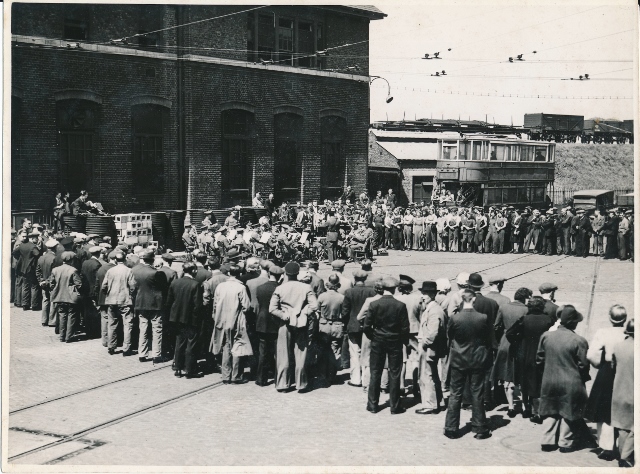
You’d think this factory was in Italy… until you see the writing on the vehicle to the left! So this is the paint factory in Charlton referred to in the video.
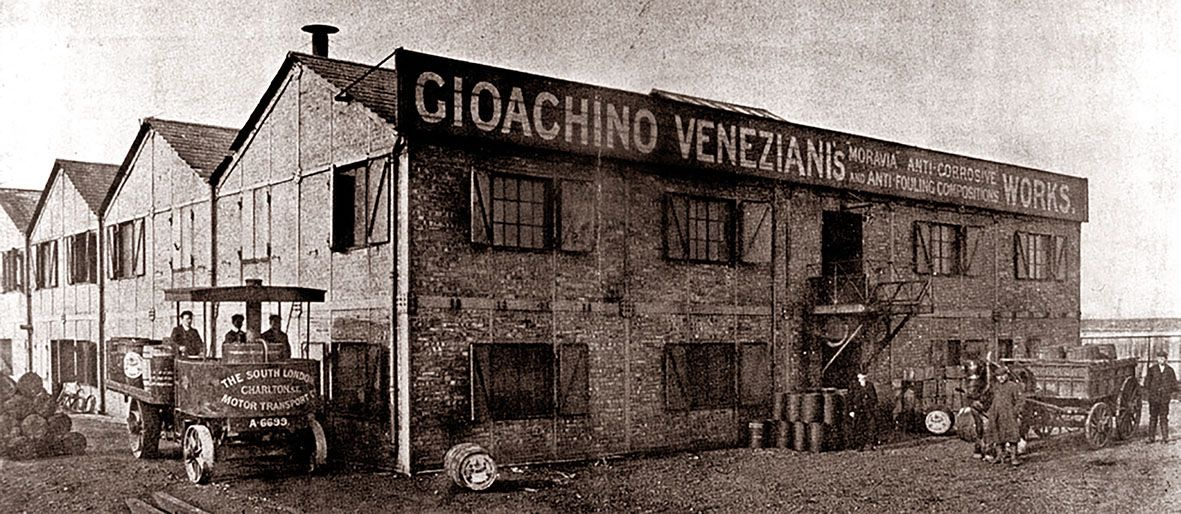 11
11 -
Italo Svevo? Writer but also manufacturer of antifouling
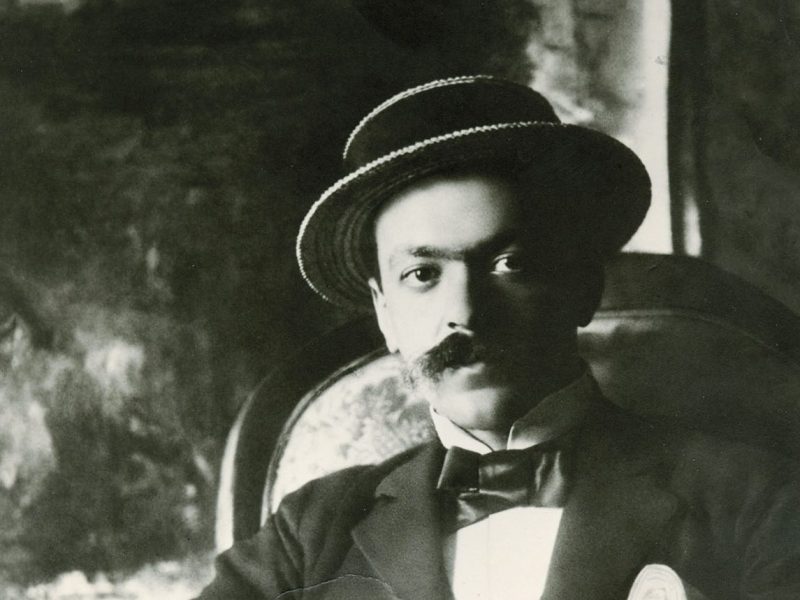
Italo Svevo was not only a famous writer, but also a business executive. Part of the success of Veneziani antifoulings is due to him
by Niccolò Volpati
Let's start from the end. The First World War is over and Italo Svevo can devote himself fully to his most successful novel: "Zeno's conscience". To do so, he can finally limit his commitment as a company manager.
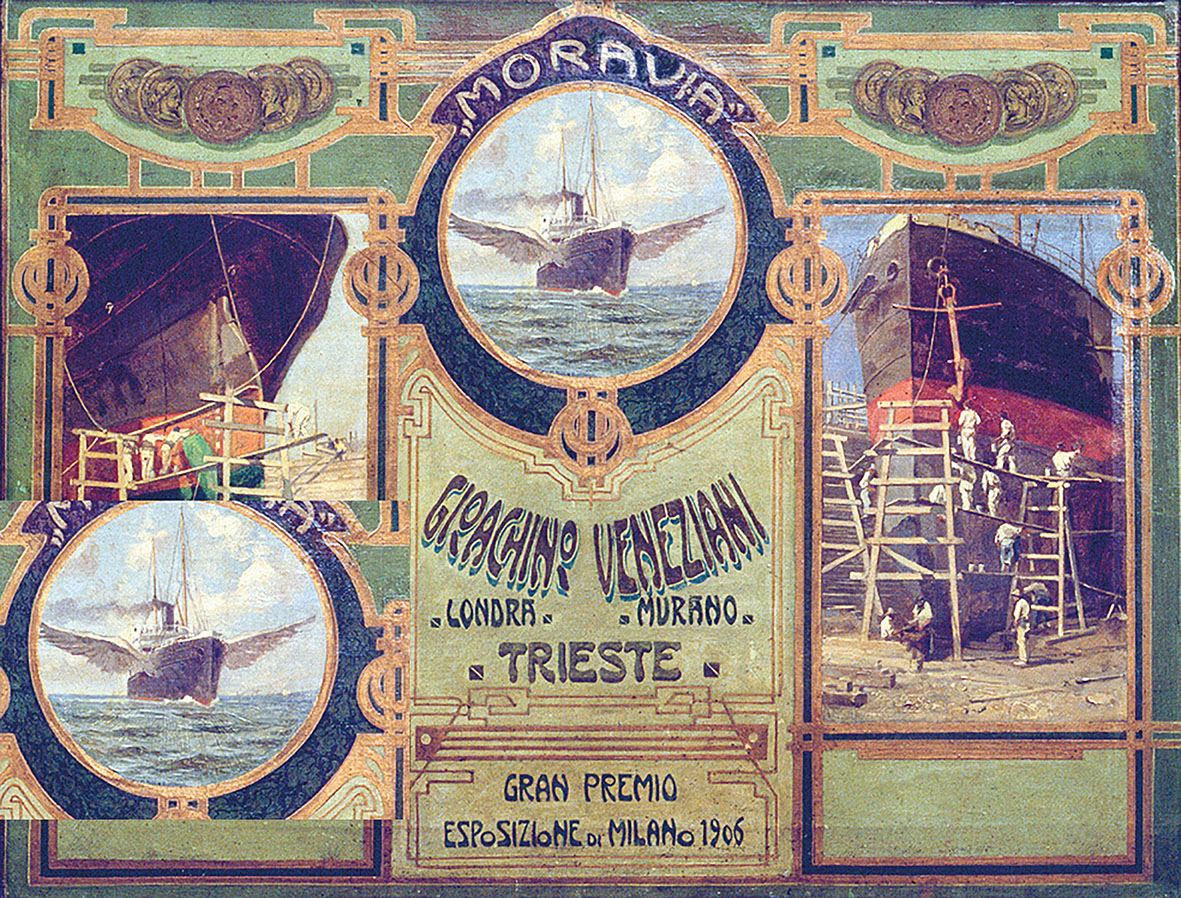
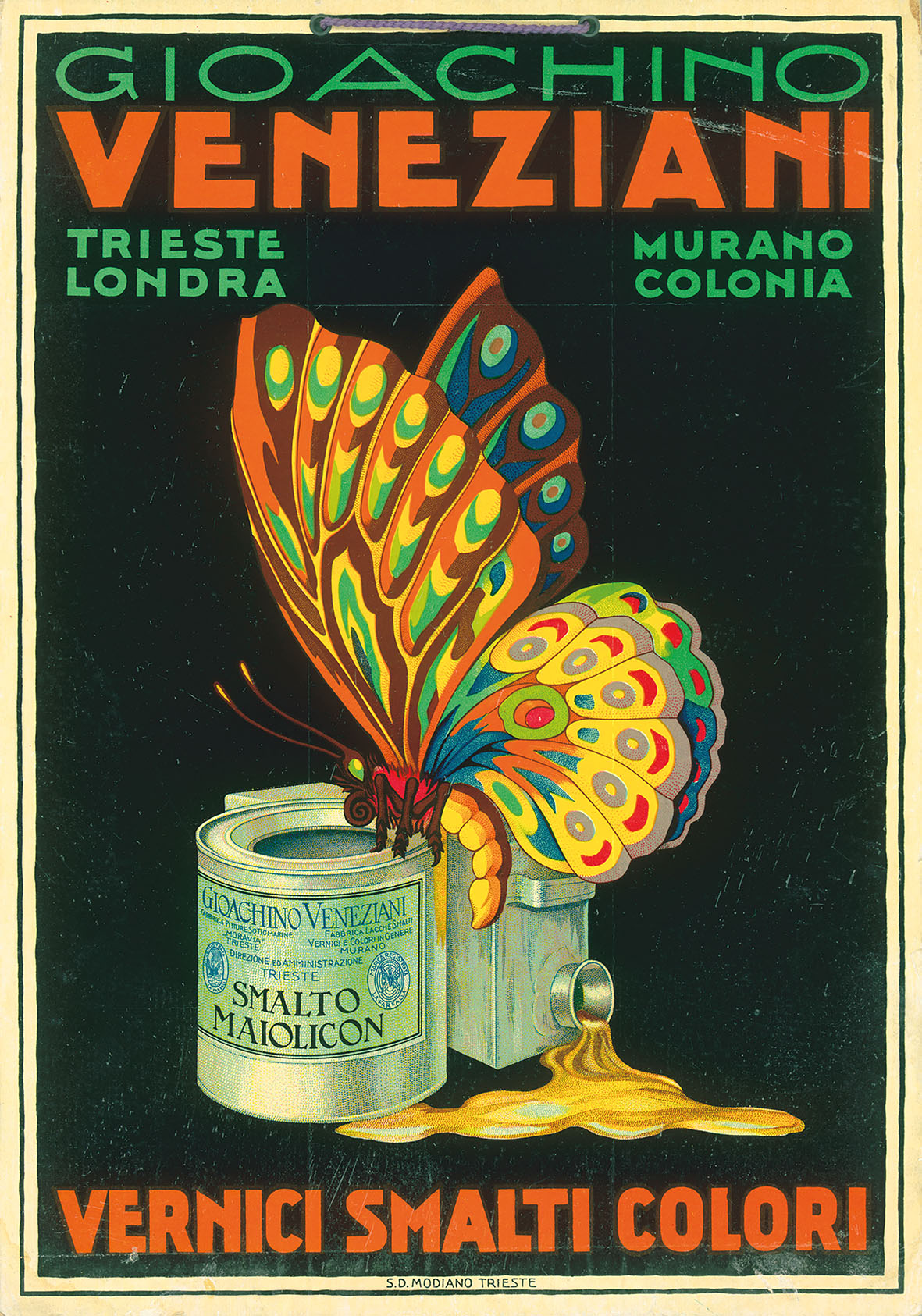
What did he do? Antifouling paints. The famous underwater painting Moravia, produced and sold by Veneziani of Trieste, owes much of its commercial success to Italo Svevo. It is above all thanks to him, in fact, that Veneziani's antifouling was also produced in London, as well as in Trieste and Murano, and supplied the British Royal Navy, but not only.
Even the hull of Shamrock V, the J Class with which Sir Thomas Lipton, the tea man, tried, in 1930, to win the America's Cup, then known as the Cup of the Hundred Guineas, used Veneziani antifouling. And Sir Lipton was also a customer won over by Italo Svevo.
But let's take it one step at a time. This story begins more or less in the second half of the 1800s in Trieste. Giuseppe Moravia produced grease for wagons, but it was a poor commodity, with little profit. Her children, Olga and Guido, were therefore forced to seek their fortune in Marseilles.
In France, Olga married a grocer: Gioachino Veneziani. When her father died in 1885, Olga returned to Trieste. As an inheritance, Giuseppe Moravia left mainly debts, but there was also a mysterious clause in the will.
In the text, in fact, a secret formula was mentioned concerning the "painting of the hulls of the canals" and in Giuseppe Moravia's last will it was provided that this secret would be handed down to his wife Francesca, better known as Fanny.
Fanny was an energetic woman and not at all resigned. He decided to set up a factory near his home to better supervise the workers and to make his children work. He bought a former tableware factory, already with the ovens suitable for producing the very secret paint for the hulls of the canals.

The very first antifouling paint was produced by John Hay, an Englishman. Inside was vegetable tar, rectified mineral oil, copper peroxide and other substances.
In England, many inventors indulged themselves in search of the magic formula to prevent the formation of algae and dog teeth on hulls.
But no one was able to develop a really effective product. When Fanny inherited her husband Joseph's secret formula in 1885, she was no longer so young. He therefore decided to entrust the production to his son-in-law Gioachino Veneziani. The problem was that she continued to keep the secret.
Neither Gioachino, nor his wife Olga, nor the workers who worked in the factory, really knew what was inside the mysterious underwater painting. Gioachino Veneziani was a grocer in Marseille where the famous Marseille soap was produced.
He managed to modify his father-in-law's secret formula by adding caustic soda and vegetable resin. He thus obtained the same advantage that Marseille soap offered. When hot, in fact, the paint spread perfectly on the hull, but once cooled it hardened and adhered perfectly to the hull.

The paint also had the advantage of "washing" the hull because in contact with seawater it melted slowly and progressively. In 1887, just two years after he started the business, the Moravia varnish produced by Gioachino Veneziani was a huge success.
All Lloyd ships passing through the port of Trieste were treated with this new antifouling. Production grew rapidly and the Trieste factory was joined by another one in Murano, near Venice. The real production manager was Olga, Gioachino's wife.
Like her mother, Fanny was quick and resolute. He preferred to hire workers who were not particularly smart because those who were too intelligent could steal the secret of the formula of the antifouling paint. To communicate between the Trieste and Murano factories, he used a real coded language to avoid industrial espionage.
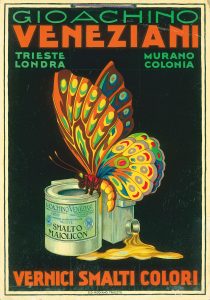
Olga herself measured the exact and very secret temperature of the boilers to produce the paint and, above all, she was breathing down the necks of the workers to prevent production from slowing down. Within a few years, Gioachino moved to the countryside and left his wife to take care of everything.
But what does Italo Svevo have to do with this story? Olga Moravia and Gioachino Veneziani had four children and one of these, Livia, married Ettore Schmitz, or Italo Svevo.
Ettore Schmitz was born in Trieste in 1861. At the age of fourteen he was sent, together with his brothers, to study German in Bavaria. Then he returned to Trieste and for nineteen years he was employed in a bank.
A job that did not satisfy him. He began to write novels and in 1892, under the pseudonym of Italo Svevo, he published "Una vita" which was followed, six years later, by "Senilità". Both of these novels remained almost completely unknown. Neither the public nor the critics appreciated them.
In 1896 he married Livia Veneziani and in 1899, after resigning from his job in the bank, he was hired in the company of his father-in-law Gioachino Veneziani. The activity of novelist had been almost completely set aside after the two failures. Olga, however, did not fully trust him. He was a guy with too many crickets in his head. Passionate about literature, a frequent visitor to libraries and even wanted to be a writer!
But at the beginning of the 20th century the opportunity arose to put this bizarre son-in-law to work. It is said that in Malta an English admiral noticed an Austrian ship entering the port for dry docking.
He was amazed at the cleanliness of the hull and inquired he learned that the previous painting had been done more than six months earlier. How was this possible? What miraculous underwater painting did he have? The Moravia paint, of course, produced by the Veneziani company of Trieste.
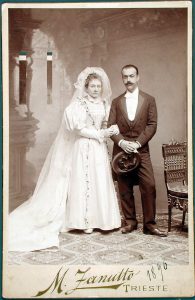
Italo Svevo with his wife Livia Veneziani
And so the Royal Navy decided to stock up on that exceptional product. Olga sent Ettore Schmitz to London and, as she told the writer Umberto Saba, he was very tense about that negotiation with the most powerful Navy in the world.
When he met the British Admiralty, he was ushered into a bare room, shortly after a plainclothes officer arrived and asked him a few simple questions and reassured him that the file was already known: the deal was done! Svevo then dedicated himself to production and in 1903 in Charlton, a suburb of London near Greenwich and the Arsenale, he opened the English headquarters of the Veneziani company.
The whole procedure was followed by Italo Svevo: choice of the place, purchase of the structure, hiring of workers. Italo Svevo was by now a famous businessman and traveled continuously moving from Trieste and Murano to London.
He needed to improve his English and for this reason he turned to a private teacher who lived in Trieste. This was none other than the writer James Joyce with whom he formed a strong bond of friendship.
At the outbreak of the First World War, Gioachino Veneziani, who was an Italian citizen and moreover suspected of irredentism, took refuge, together with his wife Olga, first in Italy, then in Zurich and London.
The war regulations required that each factory be headed by an Austrian citizen. And so Ettore Schmitz, who had an Austrian passport, became the sole owner of the Veneziani company.
On December 10, 1917, two Italian MAS sank the battleship Wien at anchor in the port of Muggia, right in front of the Veneziani house and company. Ettore Schmitz and Livia Veneziani, in contravention of the provisions on blackouts, turned on the lights, thus allowing the escaped sailors to reach the villa where they were also refreshed.
By the end of the war, Trieste had become Italian territory and Olga Moravia was able to resume her place in the management of the family factory. Ettore Schmitz returned to being Italo Svevo and, encouraged by his former English teacher James Joyce, he was able to devote himself to writing his most successful novel: "Zeno's Conscience".
8 -
I forwarded the video to my mate in Italy (Milan fan) and he was fascinated as he studied Svevo at University.
He was the person that sent me this photo of The Valley which is in the Museum.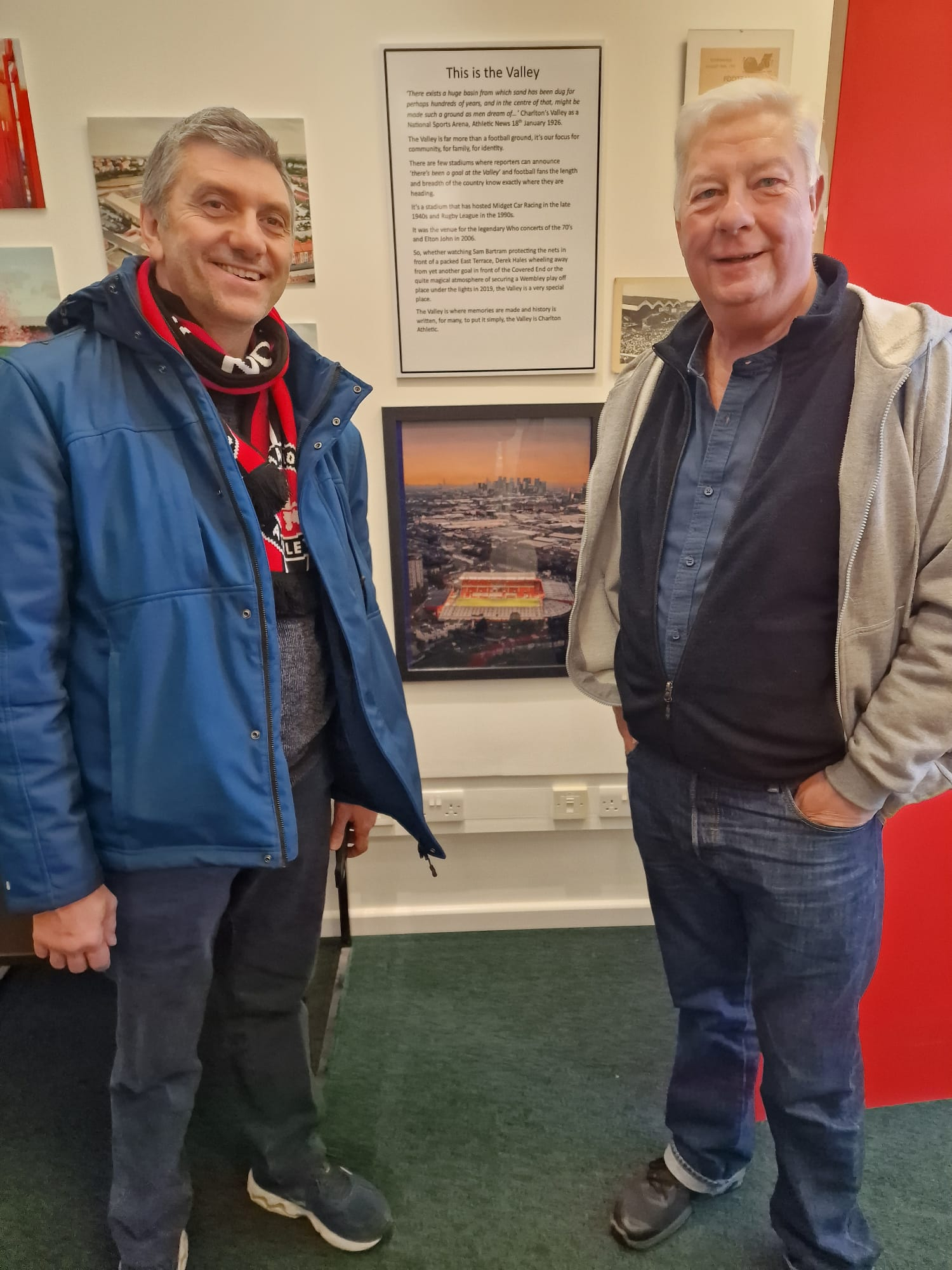 2
2 -
Sponsored links:
-
Did this become the Airfix factory? I seem to remember the letters appearing under the roof CAFC esque style.stonemuse said:You’d think this factory was in Italy… until you see the writing on the vehicle to the left! So this is the paint factory in Charlton referred to in the video.0 -
Raith_C_Chattonell said:
Did this become the Airfix factory? I seem to remember the letters appearing under the roof CAFC esque style.stonemuse said:You’d think this factory was in Italy… until you see the writing on the vehicle to the left! So this is the paint factory in Charlton referred to in the video.
No, the entrance to the Airfix factory was Felltram Way ... next to the Angerstein railway bridge over Woolwich Road. It was previously the site of the tram depot.
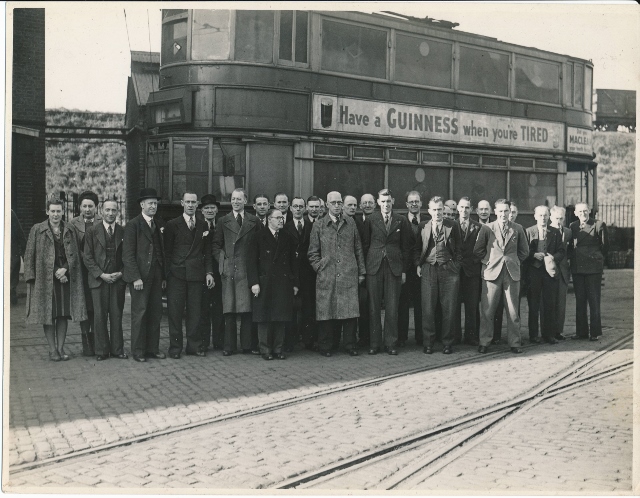
I put the paint factory roughly where the Makro car park is now.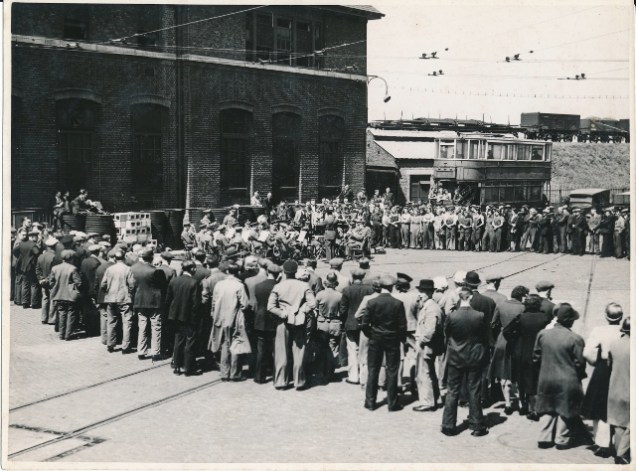 The works in June 1942
London’s trams went out of service 70 years ago, but there are still reminders of them in Charlton.
In 1952, the last trams were taken to a yard at Penhall Road to be cut up and destroyed – with some of the tracks still in place today.
At the other end of SE7 was the old Charlton tram works, where vehicles from all over London were taken for repairs and servicing. The man who ran the trams at the time, Aubrey Fell, is commemorated in the name of the small road leading to the old depot – Felltram Way.
The depot later became an Airfix factory before being demolished in the early 1990s, and the only clue left to its past is how the street widens at the entrance to the old works.
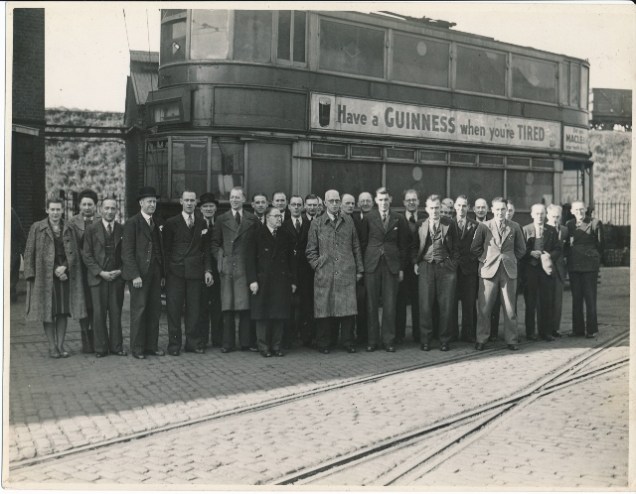 The works in February 19444
 -
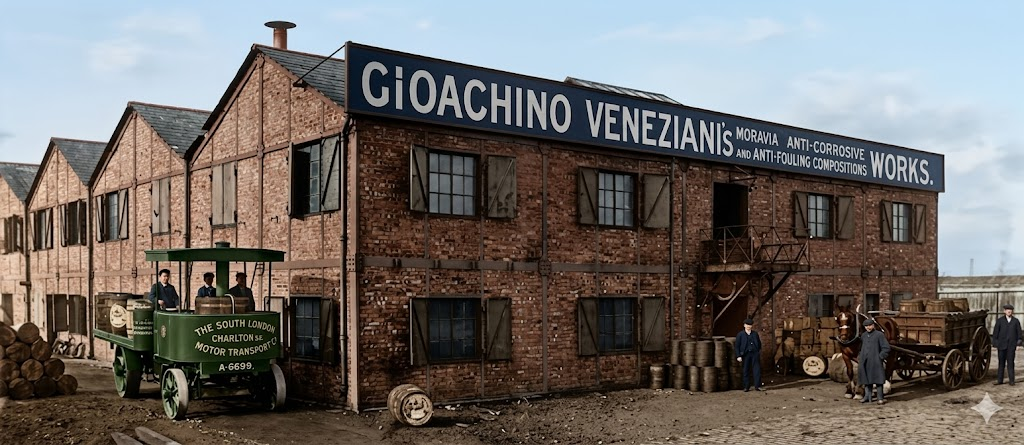 2
2 -
It is very hard to navigate.WSS said:
For somebody who moans about using technology and how it's so hard to navigate...well done.jose said:
But to do the above I linked the picture to google Gemini and basically asked it to colourise it.
My daughter in law says however, that by me using such computer stuff I am destroying the planet.
She is very forthright and persuasive.0 -
A data centre just used enough water to fill an Olympic swimming pool to produce that picture. 🤔jose said:
It is very hard to navigate.WSS said:
For somebody who moans about using technology and how it's so hard to navigate...well done.jose said:
But to do the above I linked the picture to google Gemini and basically asked it to colourise it.
My daughter in law says however, that by me using such computer stuff I am destroying the planet.
She is very forthright and persuasive.0 -
I know what I did colourising that picture was a bad thing to do, I didn’t realise it was quite that bad.CaptainRobbo said:
A data centre just used enough water to fill an Olympic swimming pool to produce that picture. 🤔jose said:
It is very hard to navigate.WSS said:
For somebody who moans about using technology and how it's so hard to navigate...well done.jose said:
But to do the above I linked the picture to google Gemini and basically asked it to colourise it.
My daughter in law says however, that by me using such computer stuff I am destroying the planet.
She is very forthright and persuasive.
I feel pretty ashamed.0 -
Don't feel too bad was just joshing.jose said:
I know what I did colourising that picture was a bad thing to do, I didn’t realise it was quite that bad.CaptainRobbo said:
A data centre just used enough water to fill an Olympic swimming pool to produce that picture. 🤔jose said:
It is very hard to navigate.WSS said:
For somebody who moans about using technology and how it's so hard to navigate...well done.jose said:
But to do the above I linked the picture to google Gemini and basically asked it to colourise it.
My daughter in law says however, that by me using such computer stuff I am destroying the planet.
She is very forthright and persuasive.
I feel pretty ashamed.
Data centres do consume plenty of power and water though, just not sure of the numbers involved.0 -
Dave Rudd said:Raith_C_Chattonell said:
Did this become the Airfix factory? I seem to remember the letters appearing under the roof CAFC esque style.stonemuse said:You’d think this factory was in Italy… until you see the writing on the vehicle to the left! So this is the paint factory in Charlton referred to in the video.
No, the entrance to the Airfix factory was Felltram Way ... next to the Angerstein railway bridge over Woolwich Road. It was previously the site of the tram depot.
I put the paint factory roughly where the Makro car park is now.I think you're wrong. If only there were somewhere we could meet to settle this disagreement.5